By the Technicut Technical Team | Surrey, BC
Key Takeaways
| Strategy | Primary Benefit | Technicut Solution |
|---|---|---|
| 1. Proper Tool Storage | Prevents micro-chipping before first use | Tool cabinets & protective storage |
| 2. Optimized Speeds & Feeds | Eliminates premature heat failure | Free technical parameter consulting |
| 3. Setup Rigidity | Reduces vibration-driven edge wear | Application engineering support |
| 4. Precision Tool Holding | Near-zero runout for consistent life | High-precision ER collets & hydraulic chucks |
| 5. Consistent Coolant Management | Controls thermal load at the cut | Refractometers & coolant guidance |
| 6. Aggressive Chip Evacuation | Prevents recutting damage | High-pressure coolant & air blast strategy |
| 7. Proactive Wear Inspection | Catches failure before it becomes catastrophic | Operator training resources |
| 8. Job-Specific Tool Selection | Eliminates “close enough” false economy | Specialized AlTiN-coated carbide end mills |
| 9. Strategic Re-Sharpening | Circular economy savings: 60–70% vs. new tool cost | Re-grind program guidance |
The Real Cost of Premature Tool Failure — And How to Stop It
If you’re running a CNC machine shop anywhere in British Columbia — from the Lower Mainland’s advanced composites shops to the Interior’s heavy industrial operations — you already know that industrial cutting tools Canada-wide represent one of the most controllable variables in your cost-per-part equation. And yet, for most shops, tooling cost is treated as a fixed overhead rather than a performance lever.
It shouldn’t be.
The uncomfortable truth is that the majority of premature tool failure is entirely preventable. In our experience working with manufacturers across Metro Vancouver and the rest of BC, the same correctable patterns show up time and again: improper storage, misapplied parameters, inconsistent coolant management. None of these require capital investment to fix — they require process discipline and the right technical partner.
What follows are nine battle-tested tool life optimization strategies we share with production managers and shop owners who are serious about protecting their tooling investment.
1. Storage: Protecting Your Investment Before the First Cut
Improper storage is the silent budget drain most shops never audit. End mills tossed loose in a drawer, inserts rattling in a shared bin — this is micro-chipping on cutting edges before a tool ever reaches the spindle. You’re paying full price for a compromised tool.
The fix is straightforward: store every cutting tool in individual compartments, foam-lined cases, or dedicated holders. Keep your tool storage away from moisture — British Columbia’s coastal humidity accelerates corrosion on HSS tools and actively degrades advanced coatings on carbide. A dehumidified, organized tooling cabinet isn’t overhead; it’s insurance.
The Technicut team can help you spec heavy-duty tooling storage designed for the throughput of a working production floor. Ask us.
2. Speeds & Feeds: The Single Biggest Lever on Tool Life
This is where the majority of tool life is gained or destroyed. Running a high-performance carbide tooling too fast generates excessive heat that burns the cutting edge within minutes. Running too slow creates rubbing rather than true shearing — destroying edges and producing unacceptable surface finish on your finished parts.
If you’re looking for a faster way to dial in parameters, machining calculator apps are a practical resource worth having on hand. Seco Assistant, available on the App Store and Google Play, is a solid example — it lets you input your tool type, material, and depth of cut and returns recommended speeds, feeds, and cutting data in seconds. Tools like this won’t replace experience, but they give your operators a reliable starting point and a quick sanity check, especially when running an unfamiliar material or trying a new tool. Several other manufacturers offer similar apps, so if you’re running tooling from multiple suppliers it’s worth checking whether they have their own calculation tools as well.
This is exactly the conversation our Surrey-based technical reps are built for. When you’re setting up a complex job with tight tolerances, a 20-minute call with the Technicut team can save you three sets of tooling. That’s a measurable ROI before you’ve cut your first chip.
3. Setup Rigidity: The Foundation Every Other Strategy Rests On
Even a perfectly matched tool, run at perfect parameters, will fail prematurely if the setup is fighting it. Excessive tool overhang is the most common culprit in BC shops we visit — the longer the tool extends from the holder, the greater the deflection, the more vibration introduced, and the faster the edge degrades.
The rule is simple: use the shortest tool that safely clears the workpiece. Every millimetre of unnecessary overhang is a tax on tool life and part quality.
Pro Tip: If you’re seeing chatter marks on your finished parts, suspect overhang before you suspect the tool.
4. Precision Tool Holding: The Link Most Shops Undervalue
Your toolholder is the critical mechanical interface between your spindle and your cutting tool. A worn collet or a low-quality chuck introduces radial runout — and runout is a tool-life killer at the RPMs that modern CNC machining solutions in BC demand.
A worn collet isn’t a minor inconvenience. It puts uneven stress on cutting edges every single revolution, accelerating flank wear in a way that’s invisible until the tool suddenly fails mid-job — taking your workpiece with it.
A quality collet replacement costs a fraction of the tooling it protects. This is one of the highest-ROI upgrades available to most BC shops running aging toolholding inventory.
5. Coolant: Precision Chemistry, Not an Afterthought
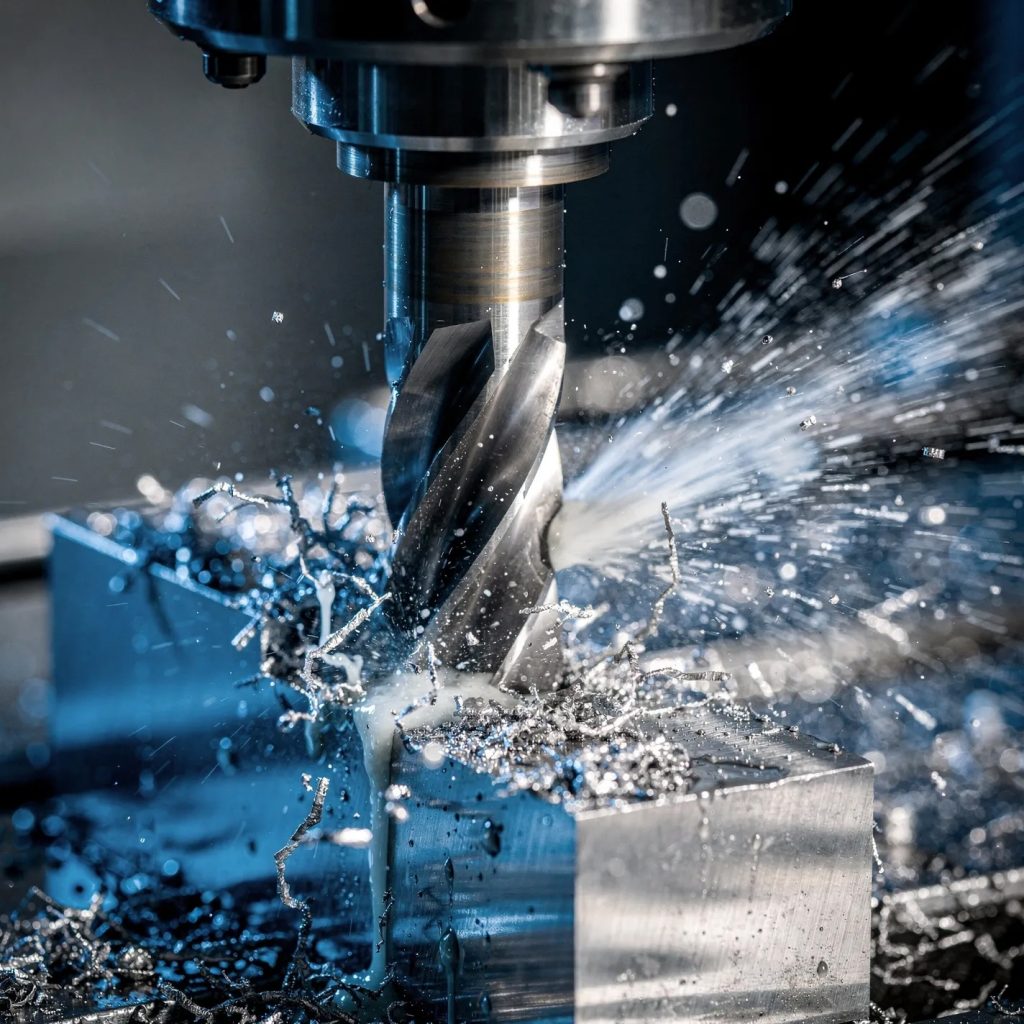
In high-throughput machining environments, coolant is doing two critical jobs simultaneously: controlling thermal load at the cutting edge and flushing chips clear of the work zone. Watch any well-dialed production cell and you’ll see flood coolant hitting the cut from multiple angles, maintaining a consistent thermal environment so the tool’s coating can do its job.
But coolant chemistry matters as much as volume. Concentration drift — coolant that’s too lean — leads to microbial growth, accelerated tool wear, and part contamination. Check your concentration regularly with a refractometer. This inexpensive handheld instrument gives you an immediate, accurate reading of your coolant mix ratio. Technicut supplies refractometers to shops across Metro Vancouver precisely because we’ve seen how much tool life walks out the door when coolant management is left to guesswork.
One important nuance: AlTiN coated tooling are specifically engineered to operate at elevated temperatures. The aluminium-titanium nitride coating forms a protective aluminium oxide layer under heat, acting as a thermal barrier. In many hard-milling applications, these tools genuinely perform better dry or with minimal mist lubrication. Applying heavy flood coolant to an AlTiN-coated tool in the wrong application can cause thermal shock and premature coating failure.
When in doubt, talk to us. Matching your coolant strategy to your tool coating and workpiece material is precisely the kind of technical guidance the Technicut team provides.
6. Chip Evacuation: The Underrated Multiplier for Tool Life
Chip recutting is one of the most destructive and least-discussed forces in a machine shop. When chips accumulate in the cutting zone and get dragged back through the flutes, the abrasive action on already-stressed cutting edges is severe. In high-feed milling of aluminum or stainless, poor chip evacuation can cut tool life in half within a single operation.
The solution is deliberate chip evacuation strategy: high-pressure through-tool coolant where your tooling supports it, directed air blast from optimally positioned nozzles, or high-volume flood coolant aimed specifically at the chip stream — not just the cutting edge.
This is one of the fastest, most cost-effective improvements available in reducing tool scrap rates. You need to get the chips out of the way of the old one.
7. Inspect Tools — And Train Your Team to Read the Evidence
A culture of proactive tool inspection is one of the clearest dividing lines between high-performing shops and those constantly firefighting unplanned downtime.
Train your operators to inspect cutting tools before setup and after each operation. The pattern of wear on a tool is diagnostic data. Catching wear at the right point in the cycle means you can pull the tool for re-sharpening — recovering significant remaining life — rather than running it to catastrophic failure and scrapping the workpiece with it.
Read the wear, not just the edge:
- Crater wear on the rake face → indicates excessive cutting speed; the tool is running too hot.
- Built-up edge (BUE) → indicates insufficient speed or inadequate lubrication; workpiece material is welding to the tool.
- Notch wear at the depth-of-cut line → often points to work-hardening in the material or abrasive inclusions.
These are not random failures. They are your process telling you something. The Technicut technical team can help your operators learn to read that signal.
Seco Tools has two resources worth bookmarking for this: their Tool Wear Patterns guide covers the major wear types with descriptions and is a good general reference, and they also offer a downloadable milling wear pattern chart (PDF) that’s worth printing and keeping at the inspection station.
8. Match the Tool to the Job — Precision Pays Back Immediately
A general-purpose tool on a job-specific application is a false economy that shows up in your cost-per-part whether you track it or not. You’ll pay in shorter tool life, more frequent changeovers, compromised surface finish, and — most expensively — scrapped parts.
Technicut stocks the full spectrum of specialized industrial cutting tools Canada’s most demanding production environments require:
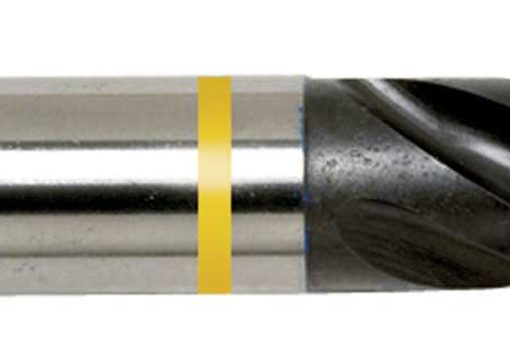
- AlTiN-coated carbide end mills for hardened steels and high-temp alloys, where the coating’s thermal barrier properties are a genuine performance advantage.
- Polished-flute cutters engineered for the aerospace and marine aluminum work that drives so much of BC’s advanced manufacturing sector.
- Application-specific drills and reamers for the tight-tolerance work that Surrey and Metro Vancouver shops are producing for global supply chains.
The right tool doesn’t just last longer — it changes the economics of the entire operation.
9. Re-Sharpen — But Before It’s Too Late
Re-sharpening is significantly cheaper than buying new tools, but the window matters. A tool sent out for re-grinding at the right point in its wear cycle will come back close to original geometry and performance. A tool ground down past its useful threshold costs more to restore and may not be recoverable to spec.
Establish a wear limit for your operation and track it. Monitor how many parts or hours each tool runs before rotation and build re-sharpening into the process rather than treating it as an afterthought.
A few important caveats: this applies primarily to solid carbide and HSS tooling — end mills, drills, reamers, and similar re-grindable tools. Indexable inserts are not re-sharpenable; when an insert edge is worn, you index to the next edge or replace the insert. For solid carbide end mills, re-grinding does reduce the tool’s diameter slightly over successive sharpenings, so tracking diameter after each grind is worth doing for tight-tolerance work. And not all re-grinding services are equal — a quality grinding house with the right equipment will restore geometry accurately, while a poor grind can leave a tool worse than it was.
Keep Your Shop Running at Full Potential
Implementing these nine habits won’t just save on tooling costs — they’ll improve part quality, reduce machine downtime, and make your team’s work more consistent and predictable.
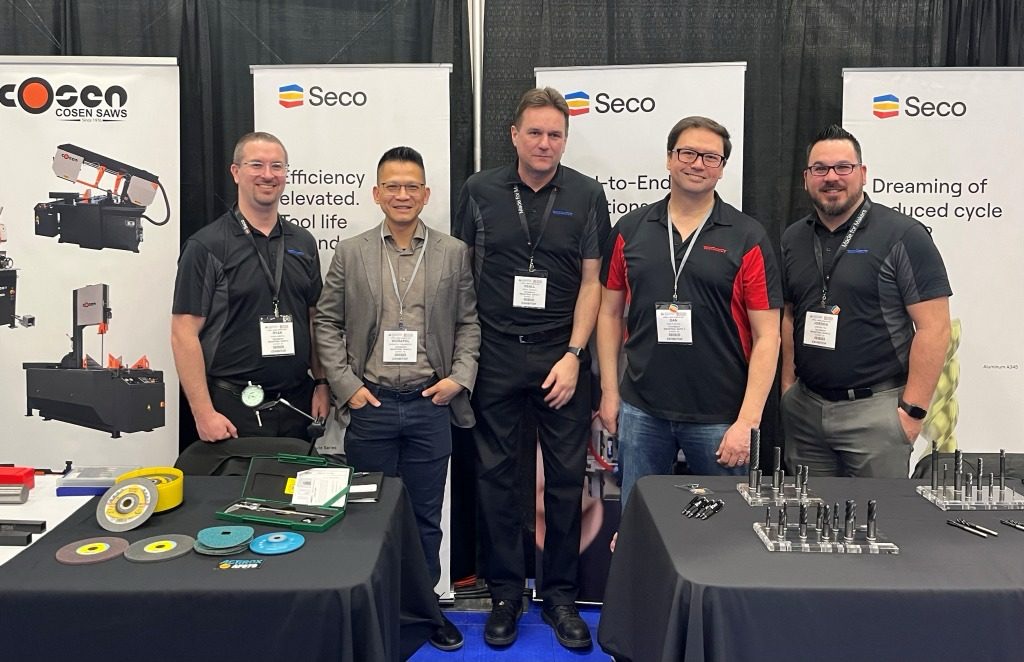
At Techniut, we supply cutting tools to machine shops and manufacturers across Surrey, Metro Vancouver, and the rest of British Columbia. Our team knows tooling, and we’re here to help you find the right solution for your specific materials, machines, and production needs.
Let’s Talk Shop.
Your operation is unique. Your materials, your machines, your tolerance requirements — they all move the optimal tooling strategy. The Technicut team in Surrey is ready to get specific with you.
We’re local. We’re stocked. And we know what it takes to keep a BC shop running at full potential.
Technicut Tools | Surrey, BC | Serving Metro Vancouver and British Columbia’s Manufacturing Sector